
Skin Cancer Excision
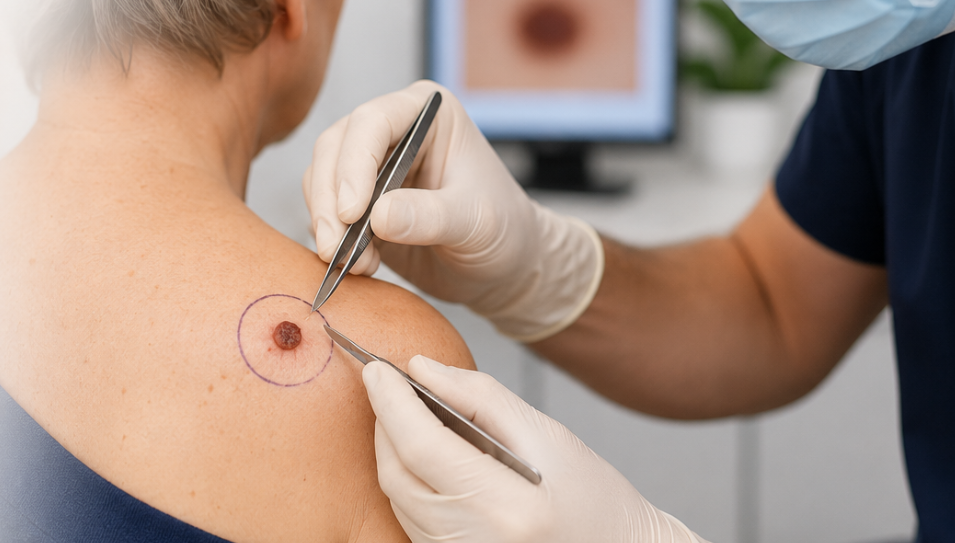
Skin Cancer Excision in Adelaide
Skin Cancer Excision is a minor surgical procedure used to remove a suspected or confirmed skin cancer, usually with a small margin of nearby normal looking skin. At Kensington Park Medical, our doctors assess suspicious skin lesions, explain whether excision is required, perform suitable in clinic procedures, send removed tissue for pathology, and arrange follow up or specialist referral when needed.
This page focuses on what happens after a suspicious spot has been found. It explains symptoms, the skin check process, common types of skin cancer growths, when skin cancer excision is required, how the skin cancer excision process works, and what our Adelaide skin cancer excision clinic can do to support you from assessment through to wound care and results.
- Symptoms and signs that may need assessment
- How the skin check process leads to excision decisions
- Types of skin cancer growths commonly removed
- When is skin cancer excision required
- Skin cancer excision process at KPMP
- Skin cancer excision options and techniques
- Pathology, margins and results
- Aftercare, healing and scars
- Why choose Kensington Park Medical
- 20 FAQs about skin cancer excision
1. Symptoms and Signs That May Need Assessment
Skin cancers do not always look alarming at first. Some are obvious, but many begin as small changes that are easy to ignore. A skin cancer may appear as a sore that does not heal, a scaly patch, a shiny lump, a changing mole, a crusted area, or a lesion that repeatedly bleeds and settles again. Because these signs can look similar to harmless skin changes, medical assessment is important.
A common reason patients need Skin Cancer Excision is that a lesion has changed over time. Change is one of the most important warning signs. A spot that grows, changes colour, becomes raised, bleeds, itches, crusts or becomes tender should be checked. A lesion that looks different from the rest of your spots also deserves attention.
- A new spot that is growing or changing
- A mole that changes colour, shape or border
- A sore that does not heal
- A scaly or crusted patch that keeps returning
- A shiny, pearly or pink lump
- A red tender patch that bleeds or forms a crust
- A dark or uneven lesion
- A spot that looks different from your other spots
- A lesion on the face, ears, nose, scalp, hands or sun exposed areas
Not every suspicious lesion requires excision immediately. Some may need dermoscopy review, photography, monitoring, biopsy, cryotherapy or referral. However, when cancer is suspected or confirmed, excision is often the clearest way to remove the lesion and confirm the diagnosis through pathology.
2. How the Skin Check Process Leads to Excision Decisions
The skin check process is not simply a quick glance at the skin. A useful skin cancer consultation looks at your risk factors, the lesion itself, your past history, your skin type, your sun exposure, your family history and whether the spot has changed. Your doctor may use dermoscopy to examine structures that are not visible to the naked eye.
At Kensington Park Medical, we aim to give patients a clear explanation of what we are seeing. Sometimes the plan is reassurance and monitoring. Sometimes the safest next step is biopsy. In other cases, skin cancer excision may be recommended because the lesion looks suspicious enough to remove or because pathology has already confirmed a skin cancer.
We ask when the spot appeared, whether it has changed, whether it bleeds, and whether you have previous skin cancers or high sun exposure.
The lesion is examined clinically and may be assessed with dermoscopy to identify suspicious structures.
Your doctor explains whether the lesion can be monitored, biopsied, excised in clinic, or referred for specialist care.
This decision process matters because skin cancer treatment should be matched to the lesion. A small low risk basal cell carcinoma on the trunk may be managed very differently from a suspected melanoma, an aggressive squamous cell carcinoma, or a lesion on the nose, eyelid, lip or ear.
3. Types of Skin Cancer Growths Commonly Removed
Different skin cancers behave differently. Understanding the likely type helps determine whether excision is suitable, how much surrounding tissue may need to be removed, and whether referral is recommended.
Basal cell carcinoma, often called BCC, is a common skin cancer that may appear as a shiny bump, pink patch, non healing sore or lesion that bleeds. BCCs often grow slowly, but they can damage nearby tissue if left untreated. Skin cancer excision is commonly used for many suitable BCCs.
Squamous cell carcinoma, often called SCC, may appear as a scaly red patch, crusted lump, tender growth or non healing sore. Some SCCs can grow more quickly and may spread if not treated. Excision is often recommended when SCC is suspected or confirmed.
Melanoma can be serious and requires prompt assessment. It may look like a changing mole, a new dark spot, an uneven lesion or a spot with irregular colour and borders. Suspected melanoma usually requires urgent biopsy or excision and may need specialist management.
There are also precancerous and borderline lesions that may require treatment or monitoring. Actinic keratoses, atypical moles and some changing lesions may not be skin cancer yet, but they still need careful assessment. Your doctor will explain whether excision is needed or whether another option is more suitable.
4. When Is Skin Cancer Excision Required?
When is Skin cancer excision required? This is one of the most important questions patients ask. The answer depends on the appearance of the lesion, the level of suspicion, biopsy results, location, size, growth pattern, medical history and the safest way to achieve complete treatment.
Skin cancer excision may be required when a lesion is confirmed as skin cancer, strongly suspected to be skin cancer, repeatedly bleeding, growing quickly, changing in a concerning way, or located in an area where complete removal gives the best chance of control. Excision may also be recommended when a biopsy has shown cancer cells and a wider removal is needed to clear the margins.
- A biopsy confirms basal cell carcinoma, squamous cell carcinoma or melanoma
- A lesion looks suspicious and needs complete removal for diagnosis
- A spot is growing, changing, bleeding or crusting
- A lesion has returned after previous treatment
- The location needs precise removal and wound closure
- Pathology is needed to confirm the type and margins
- The lesion is causing symptoms or ongoing irritation
Not all skin cancers are removed in a general practice setting. Complex lesions, large lesions, high risk cancers, cosmetically sensitive sites or lesions close to important structures may be referred to a dermatologist, plastic surgeon, skin cancer specialist or hospital service. Our role is to assess, manage suitable cases and refer promptly when that is the safer option.
5. Skin Cancer Excision Process at KPMP
The Skin cancer excision process is structured and explained before you proceed. We want patients to understand why the procedure is being recommended, what will happen on the day, what pathology will show, how the wound will be managed and what follow up is needed.
- Consultation and assessment
Your doctor examines the lesion, reviews risk factors and explains whether excision is appropriate. - Procedure planning
The location, size, likely diagnosis, anaesthetic, wound closure and aftercare are discussed. - Local anaesthetic
The area is numbed so the procedure can be performed comfortably in clinic. - Excision of the lesion
The skin cancer or suspicious lesion is removed with an appropriate margin of surrounding tissue when required. - Wound closure
The wound is closed using the most suitable technique for the site and size of the excision. - Pathology testing
The removed tissue is sent to pathology to confirm diagnosis and margin status. - Follow up
Your doctor reviews the result, checks healing and advises whether any further treatment is needed.
Most suitable skin cancer excisions are performed under local anaesthetic. This means you remain awake, but the area being treated is numbed. You can usually go home shortly after the procedure with wound care instructions.
6. Skin Cancer Excision Options and Techniques
Skin cancer excision is not one identical procedure for every patient. The technique depends on the lesion and the area of the body. The aim is to remove the cancer effectively while preserving as much healthy tissue as possible and achieving the best practical cosmetic result.
Standard surgical excision
Standard excision removes the lesion with a measured margin of normal looking skin. This is commonly used for many suitable BCCs, SCCs and suspicious lesions. The wound is then closed with stitches where appropriate.
Diagnostic excision or biopsy
Sometimes the procedure is performed to confirm what the lesion is. If the entire suspicious lesion is removed, pathology may provide both diagnosis and information about whether the margins are clear.
Wider excision after diagnosis
If pathology confirms a skin cancer and further clearance is needed, a wider excision may be recommended. This is particularly important for certain skin cancers where complete removal and margin control are essential.
Referral for complex excision
Some lesions need specialist excision, especially if they are large, high risk, recurrent or located on areas such as the eyelid, lip, nose or ear. If referral is safer, we will explain why and help coordinate the next step.
7. Pathology, Margins and Results
One of the major advantages of skin cancer excision is that the removed tissue can be sent for pathology. A pathologist examines the tissue under a microscope and reports the diagnosis, type of skin cancer, depth or features where relevant, and whether the edges appear clear of cancer cells.
Patients often ask what margins mean. A margin is the surrounding normal looking tissue removed around the lesion. Clear margins usually mean the cancer appears to have been completely removed in the sample. Involved or close margins may mean further treatment is required.
Why pathology matters: It confirms what the lesion is, helps determine whether it has been fully removed, and guides whether further excision, monitoring or specialist referral is needed.
Your doctor will explain the pathology result in plain language. If no further treatment is required, you will be advised about wound care and future skin checks. If further treatment is needed, we will discuss your options and next steps.
8. Aftercare, Healing and Scars
Recovery after skin cancer excision depends on the size and location of the wound, the closure technique, your general health and how well the area can be rested. Most wounds heal well with clear aftercare, but it is important to follow instructions carefully.
Mild discomfort, swelling or bruising can occur. Keep the dressing clean and dry as instructed.
Avoid stretching the wound, heavy lifting or activities that pull on the area until your doctor advises it is safe.
If removable stitches are used, your doctor will tell you when they should be removed based on the body site.
Scars usually fade over time. Sun protection and wound care can help support a better cosmetic outcome.
Every excision leaves a scar, but careful planning and aftercare can reduce unnecessary scarring. The priority is always safe cancer removal, but we also consider wound direction, closure tension and cosmetic outcome where possible.
9. Why Choose Kensington Park Medical for Skin Cancer Excision?
If you are searching for a Skin cancer excision doctor or Skin cancer excision clinic in Adelaide, Kensington Park Medical provides assessment, in clinic procedures for suitable lesions, pathology coordination, follow up and referral when required.
Your lesion is assessed by a GP with clinical experience in skin checks, procedures and follow up.
Excised tissue is sent for pathology to confirm diagnosis and margin status.
We explain results, wound care, future skin checks and whether further treatment is needed.
Complex or high risk lesions are referred to the most appropriate specialist pathway.
Our goal is to make the process clear and calm. You should understand why excision is recommended, what will happen, what pathology means and how to reduce future risk.
10. Frequently Asked Questions About Skin Cancer Excision
1. What is skin cancer excision?
Skin cancer excision is a minor surgical procedure where a suspected or confirmed skin cancer is removed, usually with a small margin of surrounding normal looking skin. The tissue is sent to pathology for confirmation.
2. When is skin cancer excision required?
Skin cancer excision may be required when a lesion is confirmed as skin cancer, strongly suspicious, changing, bleeding, crusting, growing or needing complete removal for diagnosis.
3. Can a GP perform skin cancer excision?
Many suitable small skin cancers can be removed by a GP with procedural experience. More complex, high risk or cosmetically sensitive lesions may require specialist referral.
4. Is skin cancer excision painful?
The area is numbed with local anaesthetic before the procedure. You may feel pressure or movement, but sharp pain should not be felt during the excision.
5. How long does skin cancer excision take?
The time varies depending on the lesion and closure required. Many in clinic excisions can be completed within a standard procedure appointment.
6. Will I need stitches?
Many excisions are closed with stitches. Your doctor will explain whether stitches are required and when they should be removed.
7. Will there be a scar?
Yes, excision creates a scar. The size and appearance depend on the lesion, location, wound closure, healing and aftercare.
8. What happens if pathology shows clear margins?
Clear margins usually mean the skin cancer appears to have been completely removed in the sample. Your doctor will explain whether routine follow up is enough.
9. What happens if margins are not clear?
If margins are involved or too close, further excision, monitoring or specialist referral may be recommended depending on the skin cancer type and location.
10. Can skin cancer excision be done on the face?
Some facial lesions can be removed in clinic, but complex facial sites such as the eyelid, nose, lip or ear may require specialist referral.
11. Is excision used for basal cell carcinoma?
Yes, excision is commonly used for many suitable basal cell carcinomas, especially when complete removal and pathology confirmation are needed.
12. Is excision used for squamous cell carcinoma?
Yes, excision is often used for suitable squamous cell carcinomas. Higher risk SCCs may require specialist management.
13. Is excision used for melanoma?
Suspected melanoma usually requires urgent biopsy or excision. Confirmed melanoma may need wider excision and specialist care depending on pathology.
14. Do all suspicious spots need excision?
No. Some lesions can be monitored, photographed, biopsied or treated differently. Your doctor will recommend the safest option based on assessment.
15. How should I care for the wound?
Follow your doctor’s dressing instructions, keep the area clean, avoid stretching the wound and return for review or stitch removal as advised.
16. Can I drive after skin cancer excision?
This depends on the site of the procedure and your comfort. Ask your doctor before the procedure, especially if the excision is on the arm, leg, face or near a joint.
17. Can I work after skin cancer excision?
Many patients return to light work quickly, but physical work may need modification to protect the wound and reduce bleeding or stretching.
18. How do I reduce future skin cancer risk?
Use daily sun protection, avoid peak UV exposure, wear protective clothing and attend regular skin checks based on your doctor’s advice.
19. How often should I have skin checks after excision?
Frequency depends on your skin cancer type, personal history, risk factors and pathology. Your doctor will recommend a follow up schedule.
20. How do I book skin cancer excision?
Book a skin cancer consultation first. Your doctor will assess the lesion and advise whether excision, biopsy, monitoring or referral is appropriate.
Book a Skin Cancer Excision Consultation in Adelaide
If you have a suspicious, changing, bleeding or non healing lesion, do not wait and wonder. Book an assessment with Kensington Park Medical. We can examine the spot, explain whether skin cancer excision is required, perform suitable procedures in clinic and arrange referral when specialist care is the safer option.
Book a skin cancer excision consultationThis information is general and does not replace personalised medical advice. Your doctor will assess your lesion and recommend the most appropriate investigation or treatment.